Twitter, Magna Media Trials Study Brands’ Path Toward Cultural Relevance

By David Cohen, Published by Adweek
 
Social media can help them develop a two-way relationship with people, rather than just sharing their messages

Respondents to a new study conducted by Magna Media Trials in partnership with Twitter had a strong message for brands: It is no longer satisfactory when they “talk the talk,” and they must also “walk the walk.”

The study found that brands clearly benefit from cultural involvement and, while there are many actions they can take in order to ensure that they are culturally relevant, accountability is the most important factor in the minds of consumers.

Media accounted for 67% of what drives a brand’s cultural relevance, and the two companies found that social media, in particular, gives those brands a pathway to impactful brand action by enabling them to form two-way relationships with people, to listen to what those people have to say and to incorporate their feedback into their actions.

Magna Media Trials and Twitter found that brand cultural relevance is highly correlated with metrics including brand favorability, brand preference and purchase intent.

The two companies shared the following takeaways for brands:

  • Be consistent: Magna Media Trials and Twitter found that younger people, in particular, are especially likely to see brands as culturally relevant when they show a consistent commitment to a cause.
  • Develop a two-way relationship with people: Brands should go beyond using media to simply put out a series of messages and get involved in the earned ecosystem, where they can converse and collect feedback.
  • Donations are a tangible way to show accountability: While people want brands to put their money where their mouth is, people are willing to do the same and pay more for brands that are donating.
  • Brands must embrace inclusivity: Creative inclusion goes beyond positioning brands as culturally relevant—it meets expectations and is a strong driver of purchase intent and brand favorability.
  • Actions speak louder by industry norms: The strength of brand actions varies by industry vertical. For example, sustainability is critical for consumer packaged goods, having an even bigger impact on the bottom line than the brand making donations.


Twitter vice president of global business partners Stephanie Prager said in a statement, “Life’s events play out across social media—Twitter is called the world’s town square by many for that reason—making the category the logical place for brands to share their stories and values and engage with people. Being part of the conversation in real-time, staying current and communicating through culture are some of the attributes brands can build through proactive, culturally relevant social media strategies.”

Magna executive vp, intelligence solutions Kara Manatt added, “The results not only show that brands should be owning their brand actions, but also telling a measurable story about them over time. Social media serves as a critical ingredient because it allows brands to own their own narrative around their place in culture and, in addition, build ‘listen/react’ relationships with people.”
 

Download the full study


Read the full article in Adweek

NEW STUDY BY MAGNA AND TWITTER REVEALS BOTTOM-LINE BENEFITS OF BRAND CULTURAL RELEVANCE

Study shows the strong relationship between brand cultural relevance and the amount consumers are willing to pay for brands


New York, NY- June 16, 2022 – New research conducted by MAGNA Media Trials, MAGNA’s industry-leading proprietary research offering, in partnership with Twitter, quantifies the benefits and drivers of brand cultural relevance today. The study, “Cultural Relevance Drivers: Understanding the Building Blocks of Brand Relevance,” reveals that brands clearly benefit from cultural involvement even to the extent of people willing to invest more in those that are perceived as more culturally relevant (based on correlation of R2=0.9786). The study found that people are no longer satisfied that brands “talk the talk,” they must also “walk the walk.” While there are many types of actions brands can take to ensure cultural relevance, accountability is now table stakes in the minds of consumers.


Another key finding from the study highlights the clear opportunity marketers have to make a big impact, with media accounting for 67% of what drives brand cultural relevance. Social media, in particular, allows brands a pathway to achieve the topmost impactful brand action – developing a 2-way relationship with people, by listening to what they have to say and reacting to their feedback. The implication is that brands should go beyond using media to simply put out a series of messages and get involved in places where they can converse and collect feedback.


“The results not only show that brands should be owning their brand actions, but also telling a measurable story about them over time,” said Kara Manatt, EVP, Intelligence Solutions, MAGNA. “Social media serves as a critical ingredient because it allows brands to own their own narrative around their place in culture and, in addition, build ‘listen/react’ relationships with people.”


Additional key findings from the study include:


  • Cultural relevance pays: Brand cultural relevance is highly correlated with metrics that matter, including Brand Favorability (R2=0.797), Purchase Intent (R2=0.791), and Brand Preference over other brands (R2=0.994).
  • Donations are a tangible way to show accountability: While people want brands to put their money where their mouth is, people are willing to do the same and pay more for brands that are donating.
  • Brands must embrace inclusivity: Creative inclusion goes beyond positioning brands as culturally relevant – it meets expectations and is a strong driver of purchase intent and brand favorability.
  • Actions speak louder by industry norms: The strength of brand actions varies by industry vertical. For example, sustainability is critical for CPG, having an even bigger impact on the bottom line than the brand making donations.


“Life’s events play out across social media—Twitter is called the world’s town square by many for that reason—making the category the logical place for brands to share their stories and values and engage with people,” said Stephanie Prager, VP, Global Business Partner at Twitter. “Being part of the conversation in real-time, staying current and communicating through culture are some of the attributes brands can build through proactive, culturally relevant social media strategies.”


The methodology used in the study included both qualitative and quantitative components. Focus groups were utilized during the qualitative phase to help define brand cultural relevance and uncover potential drivers. The quantitative phase consisted of a drivers’ analysis based on 4,917 online surveys among a nationally representative sample.


The full study can be found here.


About Twitter, Inc.
Twitter (NYSE: TWTR) is what’s happening and what people are talking about right now. To learn more, visit about.twitter.com and follow @Twitter. Let’s talk.


About MAGNA
MAGNA is the leading global media investment and intelligence company. Our trusted insights, proprietary trials offerings, industry-leading negotiation and unparalleled consultative solutions deliver an actionable marketplace advantage for our clients and subscribers.

We are a team of experts driven by results, integrity and inquisitiveness. We operate across five key competencies, supporting clients and cross-functional teams through partnership, education, accountability, connectivity and enablement. For more information, please visit our website: https://magnaglobal.com/ and follow us on LinkedIn and Twitter.

Media Contact:
Zinnia Gill
Mediabrands
Vice President, Global Corporate Communications
(646) 965-4271


MAGNA FORECASTS AD INDUSTRY GROWTH WITH FIFA WORLD CUP, U.S. ELECTION

By  Tony Hao, Published on AdAge

Despite the current challenging economic and geopolitical conditions, Interpublic Group of Cos.’ Magna is forecasting growth in ad markets around the world. The media agency forecasts a 9.2% growth in global ad revenue to $816 billion by the end of 2022.

The agency released its advertising forecast this morning, one day after WPP’s GroupM published its ad revenue midyear forecast. Magna similarly predicts that the growth of the ad industry will slow down: the 9.2% global growth rate drops from last year’s midyear prediction of 14%.

“Most of the headwinds facing the advertising market this year were expected,” the forecast reads, quoting Vincent Létang, Magna’s global market research executive VP. Létang cited several factors that have contributed to Magna’s anticipation of the ad industry’s deceleration, including the unprecedented boom of the market in 2021, the supply chain issues and inflation that predated 2022, and privacy restriction changes exemplified by Apple’s iOS privacy updates.

The global economy has also witnessed a slowdown since the second quarter of this year, and the geopolitical situation in Ukraine has increased energy prices, discouraged trade, and exacerbated global inflation. All these factors will inhibit the expansion of the ad industry in the second half of 2022, said Magna, which accordingly abated its prediction of the 2022 global ad industry—at the end of 2021, it predicted global ad revenue would grow by 12% this year.

‘Organic and cyclical factors’

Nevertheless, the ad market is still slated to expand, thanks to “organic and cyclical factors,” Magna predicts.

In a phone interview, Létang enumerated numerous “organic” growth factors of the ad industry. In digital marketing and online media, for example, video and audio marketing is still far from reaching its plateau. “Millions of small businesses are still developing,” said Létang, “and digital advertising was doing none of that two years ago.”

Through the expansion of the digital advertising landscape that started last year, e-commerce skyrocketed, and the development of new products in consumer packaged goods and pharmaceuticals have been shifting market priorities. In addition, impending policy changes, exemplified by E.U.’s ban on gas-powered vehicles in 2035, have accelerated the innovation of “production, technology, and communication,” said Létang.

Magna’s “cyclical factors” refer to periodic events that stimulate the ad industry. “The U.S. election is an obvious one,” said Létang, which will generate “about $8 billion of political advertising that will go into local television.” Létang acknowledges that not all political ads this year will contribute to an increase in ad revenue, but “90% of [U.S.’s political ads in 2022] will be incremental.”

Aside from the U.S.’s local political events, international sports festivities will also contribute to the increase in global ad revenue. Létang mentioned the Beijing Winter Olympics, which took place last winter, and the Qatar World Cup, as examples. The World Cup in particular will have a stronger impact on the global advertising industry, given that it will be held in November, right before the holiday season, when marketing campaigns abound and ad rates soar.

Magna observes that these organic and cyclical factors have already translated to a strong ad market in the first quarter of 2022, in which the U.S., for example, saw a 14% increase in ad revenue. “Consumer mobility finally recovered,” Létang said, “especially when it comes to transit.” Other industries also saw organic growth, most noticeably the betting, tech and entertainment industries.

Digital, traditional media, TV

Magna predicts digital advertising sales to grow by 13% to reach $534 billion, 65% of the total ad sales, in 2022. Among different digital ad formats, digital video will see the most growth of 16%, while search will occupy the biggest market share of $265 billion. Social advertising will only experience an 11% growth, lower than both video and search. Besides the aforementioned Apple privacy restriction updates, the plateauing of user and client numbers on social media is another factor in the slow growth of social advertising, according to Létang.

Advertising revenue for traditional media (TV, radio, out-of-home, print, and cinema) will grow by 4% to $282 billion, which represents 94% of the pre-COVID traditional media revenue. As the global pandemic situation alleviates, out-of-home ad revenue will welcome a 10% increase. Audio and TV will grow by 4%, while publishing will decrease by 3%, Magna reports. Much of such growth of traditional media will come from ads generated by cyclical events—traditional media ad revenue would otherwise only grow by 2%.

Traditional media is slated to grow thanks to its digital shares. In publishing and audio, for example, 50% and 20% of their revenues, respectively, come from ads in the digital format.

TV ad sales also benefit from its digital share, specifically AVOD. Magna predicts AVOD revenue to grow by 10%-15%.

National forecasts

Magna expects U.S. advertising revenue to grow by 11.1%, to reach “a new all-time high at $326 billion” by the end of 2022 and account for 39.9% of the global market. Notable driving factors for U.S.’s ad industry include political ads and the recovery of entertainment and travel. On the other hand, pure-play digital media and social media, due to Apple’s new privacy restrictions, will continue to see the growth of their ad sales decelerate. CPG categories, due to the increasing gas price and the global supply chain issues, may stagnate or decrease their ad budgets.

Among other top-15 advertising markets around the world, India and South Korea will both post strong growth of 15% and 11% respectively, Magna predicts.

China, the second-largest ad market, which accounts for 15.4% of global ad revenue, will grow by only 8%. Magna attributes China’s lethargic market to the nation’s strict COVID lockdowns and increasingly tightened regulatory environment for digital media.

Germany is among the countries that will suffer the most from the current economic and geopolitical events of the world, as its ad market will only expand by 6%. Germany abundantly exports automobiles to China and imports raw materials from Russia and Ukraine.

Nevertheless, Germany’s ad industry stagnation appears only temporary. “They’re slowing down, but not falling off a cliff,” said Létang. “There’s resilience.”
 

Read the Global Ad Forecast


Read the Article in AdAge

Snap, Magna Media Trials Study Role of AR Ads in Consumer Purchase Journey

By David Cohen, Published by Adweek

Respondents found them to be more informative and useful than pre-roll


Snap Inc. teamed up with the Magna Media Trials proprietary research offering from Magna on The Augmented Reality Playbook: Understanding the Role of AR in the Purchase Journey, a new study aimed at uncovering the true capabilities of augmented reality ads, such as Snapchat lenses, and understanding their role in the consumer purchase journey.

The two companies said research was derived from multiple brands in different verticals, including Lego and Levi’s, in five different markets: Australis, Canada, France, Saudi Arabia and the U.S.

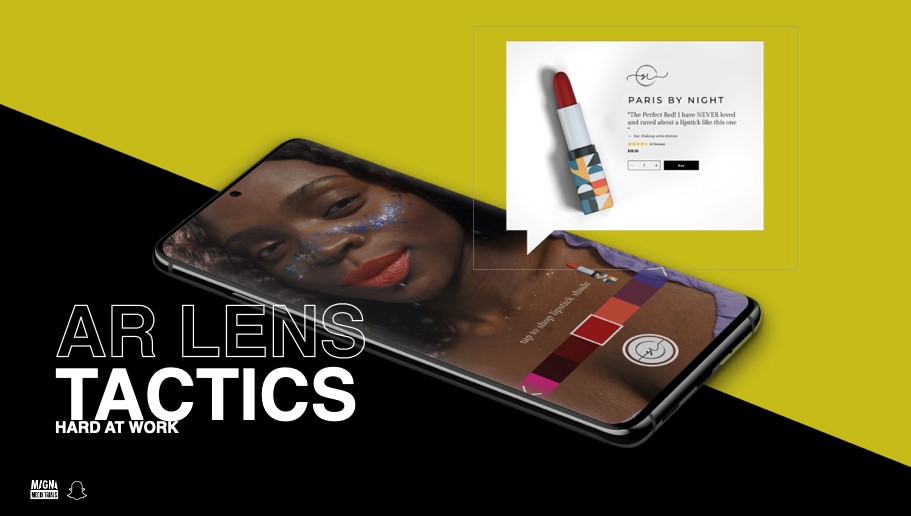
Snapchat AR lenses that were tested included gamified entertainment lenses, front-facing lenses, interactive entertainment lenses, shoppable AR lenses and world facing lenses.

AR Lens Tactics
Snap, Inc./MAGNA

Findings by Snap and Magna Media Trials included:

  • AR ads provide utility and help brands build deeper connections with consumers. Marketers should leverage this to differentiate their brand when it matters most. Consumers found AR ads to be 5% more informative and 6% more useful than traditional pre-roll ads, and AR ads made them feel closer to the brand 1.3 times more and got them excited about the brand 1.1 times more.
  • AR ads play a unique role in each phase of the purchase journey. Marketers shouldn’t view AR as an add-on, but an always-on tool to build and amplify brand messages. They capture consumers’ attention for those early in the purchase journey. For those in the consideration process, AR ads shape brand opinions in a positive light, leading consumers to think of the brand as more up-to-date and differentiated when it matters most. Finally, for those ready to make a purchase decision, AR ads drive intent to take the next steps—bringing the brand top-of-mind, increasing brand favorability and actively searching for the brand.
  • While AR can shape how consumers feel about brands, marketers should use different AR formats to achieve their desired outcomes. Shoppable AR lenses trigger consumers at the end of their journey to take the next step, driving search intent up 8%. Gamified entertainment AR lenses bring in a broader audience and differentiate consumers in the beginning of the purchase journey, driving search intent up 12%. And interactive entertainment AR lenses are found to boost memorability (by 9%) and brand perception3people in the middle of the journey see the brand as more innovative (9% more), and those in the end see it as unique (8% more). Meanwhile, the ability to interact with the product through world facing AR lenses, such as viewing furniture from the consumers living room, impacts those in the middle of the journey and results in higher purchase intent (8% more) and brand relevance (7% more). And front-facing lenses help lift brand image among those closer to purchase, with 5% lift in brand uniqueness and a 4% lift is relevancy.
  • AR should be strategically positioned in campaign sequencing as part of consumer’s exposure to the brand on the platform. Brands benefit directly with higher purchase intent (6% more) and brand preference (6% more) when an AR ad is in the mix. Snap and Magna suggested placing AR in the middle of video, as the element of delight helps build brand perception.


Snap vice president of global agency partnerships Dave Roter said in a statement, “We have seen firsthand the value AR brings to the marketing mix, and specifically how Snapchat can contribute to full-funnel success, as we’ve been creating AR experiences for nearly a decade. AR provides an immersive experience for our advertisers, and these findings further demonstrate that AR offers a differentiated opportunity for brands to reach the right audiences, when it matters most, all while driving meaningful business for our customers.”

Magna executive vp, intelligence solutions Kara Manatt added, “AR has been around and has been tested in the marketplace, but there were still many questions regarding how and where AR could fit in the marketer’s toolbox. The research reveals that AR provides utility and informs consumers about the brand, above and beyond pre-roll video ads, while also enabling brands to build deeper, more personalized connections with consumers.”

Read the Full Study


Read the Article in Adweek

NEW RESEARCH STUDY BY MAGNA & SNAP INC. EXPLORES THE UNIQUENESS OF AR AND HOW IT FITS IN THE MARKETER’S TOOLKIT

Study finds AR ads provide utility and helps build deeper connections with consumers and reveals AR best practices to optimize purchase journey


New York, NY – June 6, 2022 – Brands everywhere are continuing to recognize and harness the power and capabilities of Augmented Reality (AR) Lenses, which allow consumers to enhance the world around them. In collaboration with Snap Inc., MAGNA Media Trials, MAGNA’s industry-leading proprietary research offering, today announced a new study, The Augmented Reality Playbook: Understanding the Role of AR in the Purchase Journey. The study aimed to uncover the true capabilities of AR ads (Lenses), as well as understand the role of AR ads in the consumer purchase journey.

Research was gleaned from multiple brands representing different verticals, including Levi’s and The LEGO Group, and was conducted in five different markets including US, Canada, Australia, Saudi Arabia, and France. Different types of AR Lenses were tested to explore the potential of AR, including: Shoppable AR Lenses, Gamified Entertainment Lenses, Interactive Entertainment Lenses and tactics like World Facing Lenses, and Front Facing Lenses.

“AR has been around and has been tested on in the marketplace, but there were still many questions regarding how and where AR could fit in the marketer’s toolbox,” said Kara Manatt, EVP, Intelligence Solutions, MAGNA. “The research reveals that AR provides utility and informs consumers about the brand, above and beyond pre-roll video ads, while also enabling brands to build deeper, more personalized connections with consumers.”

The study shined a light on how the sequence of video and AR can play a crucial role in engagement.  Tested within a multi-product campaign that started the sequence with a video ad and followed with interactive AR, showed amplified impact on traditional metrics.

“We have seen firsthand the value AR brings to the marketing mix, and specifically how Snapchat can contribute to full funnel success, as we’ve been creating AR experiences for nearly a decade” said Dave Roter, VP of Global Agency Partnerships, Snap Inc. “AR provides an immersive experience for our advertisers and these findings further demonstrate that AR offers a differentiated opportunity for brands to reach the right audiences, when it matters most, all while driving meaningful business for our customers.”

The Augmented Reality Playbook Key Findings and Data Points:

According to the study,

  • AR ads provide utility and help brands build deeper connections with consumers. Marketers should leverage this to differentiate their brand when it matters most.
    • Consumers found AR ads to be significantly more informative (+5% more than Pre-roll ads) and more useful (+6%) than traditional pre-roll ads.
    • The study also uncovered that various types of AR ads tested helped consumers feel closer to the brand (1.3x more than pre-roll) and got them excited about the brand (1.15x more than pre-roll).


  • AR ads play a unique role in each phase of the purchase journey – marketers shouldn’t view AR as an add-on but an always-on tool to build and amplify brand messages
    • For those early in the purchase journey, AR ads capture consumers’ attention.
    • For those in the consideration process, AR ads shape brand opinions in a positive light, leading consumers to think of the brand as more up-to-date and differentiated when it matters most.
    • For those ready to make a purchase decision, AR ads are impactful throughout the branding funnel, but most importantly drive intent to take the next steps – bringing the brand top-of-mind, increasing brand favorability, and actively searching for the brand.


  • While AR can shape how consumers feel about brands, marketers should use different AR formats to achieve their desired outcomes.
    • Shoppable AR lenses trigger consumers at the end of their journey to take the next step, driving search intent (+8%).
    • Gamified entertainment AR lenses bring in a broader audience and differentiate consumers in the beginning of the purchase journey (+12%).
    • Interactive entertainment AR lenses are found to boost memorability (+9%) and brand perception – people in the middle of the journey see the brand as more innovative (+9%) and those in the end see it as unique (+8%).


The ability to interact with the product through world-facing AR lenses, such as viewing furniture from the consumers living room, impacts those in the middle of the journey and results in higher purchase intent (+8%) and build relevance for the brand relevance (+7%). While front-facing lenses help lift brand image among those closer to purchase, with +5% lift in brand uniqueness and 4% lift is relevancy.

  • AR should be strategically positioned in campaign sequencing as part of consumer’s exposure to the brand on the platform.
    • Brands benefit directly with higher purchase intent (+6%) and brand preference (+6%) when an AR ad is in the mix
    • Place AR in the middle of video, as the element of delight helps build brand perception


The full study can be found here.


About MAGNA:

MAGNA is the leading global media investment and intelligence company. Our trusted insights, proprietary trials offerings, industry-leading negotiation and unparalleled consultative solutions deliver an actionable marketplace advantage for our clients and subscribers.

We are a team of experts driven by results, integrity, and inquisitiveness. We operate across five key competencies, supporting clients and cross-functional teams through partnership, education, accountability, connectivity, and enablement. For more information, please visit our website: https://magnaglobal.com/ and follow us on LinkedIn and Twitter.

About Snap Inc

Snap Inc. is a camera company. We believe that reinventing the camera represents our greatest opportunity to improve the way people live and communicate. We contribute to human progress by empowering people to express themselves, live in the moment, learn about the world, and have fun together.

Media Contact:
Zinnia Gill
Mediabrands
VP, Global Corporate Communications
(646) 965-4271
[email protected]