Demo Buying Works, But Study Finds Added Benefits When Buyers Embrace First- And Third-Party Data.

Published on Inside Radio

Demographics have long been the guide posts for buyers as they approached audio advertising, and that remains the rule of thumb for broadcast radio. But as marketers approach digital audio, a new study finds that investment in first- and third-party data pays off in delivering a better return on their spending.

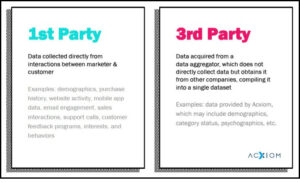
Magna, the media intelligence and investment arm of IPG Mediabrands, and SXM Media partnered on the study among music streamers. It identified and matched audience segments using first and third-party data from IPG’s Acxiom against roughly 12,000 data attributes – from behavioral to demographic – with a focus on a personalized experience. It then compared the results of those so-called “matched ads” to spots placed using just traditional demographic information such as age, gender, and income. The results show both additional data sources beat demographics alone.

First-party data delivered a 52% increase in aided ad recall while audiences bought using third-party data had a 42% increase in aided ad recall. That compared to a 34% increase for recall among music streamers targeted using traditional demographic parameters.

“This data shows that if brands are only leveraging demographic audiences in their digital audio buys, they are not leveraging the full power of digital audio and are leaving some effectiveness and cost efficiencies on the table,” says Kara Manatt, Executive VP of Intelligence Solutions at Magna.

The report says those matched audiences are also more cost effective at driving purchase intent. While demographic audiences have a $0.25 cost per person cost, it finds that those targeted using third-party data are much cheaper at a $0.09 cost per person.

Manatt says the research is not implying that demographic targeting doesn’t work, but rather that first- and third-party data can be used to sniff out audiences that can be even more impactful at driving metrics like recall and purchase intent. The study finds that those streaming listeners who were sourced that way had more than three-times greater impact on purchase intent. While demo-based buys had a 6% lift on purchase intent, the matched audiences delivered a 19% boost.

“We found that going beyond demographics alone yields stronger results across the key metrics that marketers care about, creating more memorable ad experiences and driving purchase intent,” says Melissa Paris, VP of Sales Research & Analytics, at SXM Media. “Reaching people based on demographics works. However, people are naturally more than their demographic profile, so when advanced data is used to identify those with a high propensity to buy, the impact on branding KPIs is greater.”

The research was done with clients in the audio and travel categories. While their identities are not being released, Magna and SXM Media say the ad creative was tailored to align with audience insights to highlight key product features that would be most relevant, or select a music bed or voiceover that would resonate with a brand’s intended audience.

“While the size of the impact differed, the patterns in the data were very similar for both auto and travel in that matched audiences consistently performed better,” Manatt says.

The customized message was not only useful to the brand, but also listeners as more than half said they found more personalized ads provided helpful information.

The matched audiences also helped sway those in the discovery phase. Brand favorability rose 13% with first- or third-party matched audience ads, compared to 1% gain for demo-based ads. The customized ads also had a 17% lift in users finding the brand “exciting” while the general market ad had 5% boost.

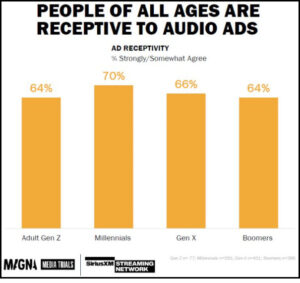
Regardless of how audiences are targeted, the study shows people of all ages are receptive to audio ads. About two-thirds of each age group say they are open to audio advertising, with Millennials the most receptive to the medium.

“We often find that it is more difficult to capture and hold the attention of younger generations, so it is very interesting to see all generations highly receptive to audio ads,” Manatt says.

The study focused on streaming music, and researchers are cautious about concluding the results would be the same for spoken word audiences.

“This would be a great next study,” Manatt says, “especially given how passionate we know listeners are about their podcasts.”

Read the Article on Inside Radio

8 Predictions for 2024 as Marketing Seeks a New Normal

Published on Marketing Dive

How winners and losers could shake out in retail media, streaming TV and social commerce.

Is the marketing pendulum swinging back toward normalcy in 2024? Ad spending is trending that way but skewing more digital than ever. A potential recovery comes on the back of easing inflation, which could lead CMOs to loosen their purse strings following a quiet period.

Marketers will have no shortage of engagement opportunities, including the Super Bowl, the Summer Olympics and U.S. consumers’ growing appetite for more global sports like soccer and Formula 1. Experiments will run rampant with generative artificial intelligence (AI), retail media networks and cookieless identifiers, inviting some stumbles and lessons learned along the way. Streaming’s embrace of advertising could offset steep losses for TV and foster fresh innovations in CTV marketing — though it may not be enough to prevent platform consolidation.

But brands are entering the new year after a battering 2023 that saw many swept up in culture war backlash. Upcoming elections will ignite political ad spending but may lead marketers to play it safe lest they become the next Bud Light.

“Brands will find themselves in the crosshairs,” said Jay Pattisall, vice president, principal analyst at Forrester Research. “The PR industry and specifically the crisis and issues services inside PR agencies will be in high gear.”

Hovering in the background are major unanswered questions: Will the tech antitrust crackdown come to a head? How will ethical and legal battles around AI affect its growth trajectory? Is anyone actually prepared for the death of the cookie now that it’s finally in motion?

Specific is the new broad
With societal divisions running high, marketers may hit the consumer sweet spot in 2024 by honing general emotional appeals, including themes around shared humanity. Those efforts will align with a push to address a perceived overcorrection toward performance marketing in recent years, which has hamstrung the ability to make an impact.

“You had a lot of really anthemic advertising during the pandemic and then you saw brands shift toward more functional messaging,” said Anne Ryan, vice president of brand strategy at Brownstein Group. “It’s coming back toward the middle now.”

Reflecting on 2023’s breakout successes could also be instructive. Take Mattel’s pop culture takeover with “Barbie,” a movie that balanced a pointedly progressive, feminist message with crowd-pleasing comedy. The box office smash was buoyed by a dizzying array of tie-ins touching on everything from home decor to watches, showing that entertainment marketing has wide appeal.

“Specific is the new broad. With ‘Barbie,’ they really captured that,” said Rona Mercado, CMO at culture agency Cashmere. “When you are able to market to those specific groups — the nuanced groups — it trickles down and then it expands. That was a lesson for everyone.”

Agency identities in flux
Just a few days into 2024, Interpublic Group sold a pair of iconic agencies to relative newcomer Attivo Group. The surprise deal demonstrates that ad holding companies may look to further trim their portfolios following a challenging year that saw the merger of legacy brands like Wunderman Thompson and VMLY&R. Meanwhile, promising indies are getting swallowed up in a shrinking market for boutique firms.

In the fight for growth, agencies will pursue two paths forward in 2024, per analysts: Peeling back layers to better specialize in lucrative boom areas, such as retail media, or hitting the gas on expanding into a full-service offering that balances brand and performance duties.

“It’s the collision of precision and persuasion, or brand and performance marketing. They’re becoming more one and the same,” said Forrester’s Pattisall.

As agency identities become more fluid, a positioning around “digital” will disappear in an uber-connected world. Looming over the space are the risks and potential rewards posed by generative AI. The tech will drum up new business in 2024 but also result in at least one high-profile blunder, followed by a subsequent uptick in agency reviews.

“At some point, the luck is going to run out and a high-profile AI SNAFU is going to materialize. Many marketers will immediately go to their current agency suppliers and start asking a lot of questions,” said Pattisall. “More questions lead to the potential for more reviews.”

Retail media’s gold rush ends
Retail media networks will enter their own consolidation period in 2024 as marketers sift through dozens of offerings that are struggling with standardization and cut those that can’t demonstrate a distinct performance boost.

“The growth in retail media will continue, but it will continue in favor of those that can prove out that they’re driving incremental value for the brand,” said Jeffrey Bustos, vice president of measurement, addressability and data center at the Interactive Advertising Bureau. “The gold rush is over.”

CPG brands that are under pressure to prove their bets on retail media are worth it will demand a few offerings from networks in 2024. Those include programmatic marketplaces in line with what Kroger and Walmart are developing, along with greater scale into channels like offsite and in-store media. Demands for programmatic know-how will continue to benefit a burgeoning intermediary ecosystem that includes The Trade Desk, Criteo and Pubmatic.

The shock to the system that the death of the cookie will provide could also make retail media more expensive. On-site inventory is reaching a tipping point, pushing more publishers to focus on offsite formats, which might drive up the price of ID-based ad targeting overall.

“The supply hasn’t caught up enough to enable [retail media networks] to continue scaling in the open web as they’ve been scaling over the past few years, on-site primarily,” said Patrick Gut, vice president of U.S. at Adlook. “As that’s tapering off, we’re going to see not as much growth.”

Will social commerce (finally) have its moment?
As the digital takeover continues, social media is expected to be one of the fastest-growing segments in 2024. Google’s removal of third-party cookies is helping marketers reevaluate the channel’s data-driven potential, said Jimmy George, strategy director at Mischief @ No Fixed Address, including in the revitalized area of social commerce.

“I think Threads has a great opportunity to displace X.”
Evan Horowitz, Co-founder and CEO, Movers+Shakers

Retail social commerce sales in the U.S. are expected to total $82.82 billion in 2024, a 23.5% year-over-year gain, per Insider Intelligence. Much of the recent buzz in the space has focused on the U.S. launch of TikTok Shop. Already the preferred app among teens, TikTok could set a new category standard, anticipates Evan Horowitz, co-founder and CEO at Movers+Shakers.

“TikTok will pass Instagram at making that [purchasing] funnel even shorter,” said Horowitz.

The creator economy is also on the upswing, with 44% of advertisers expected to increase their investment this year. Social commerce is expected to fuel creator spending, according to Cristina Lawrence, executive vice president of consumer and content experience at Razorfish, who added that creators will become “armed with commerce sophistication.”

Horowitz expects long-form content to bounce back this year to some degree, though TikTok will continue to lead short-form’s charge. The exec also anticipates stronger interest in Threads, especially as Elon Musk’s X continues to struggle to attract brands.

“I think Threads has a great opportunity to displace X,” Horowitz said.

Disruptor brands pose a stronger threat
Brands have been challenged to stay nimble and look beyond traditional media tactics or risk falling to the wayside. Demands for agility are particularly high among younger generations, who lack conventional brand affinity but are gaining in spending power. Accordingly, disruptor brands, often lauded for their ability to move swiftly, have taken the spotlight and are expected to become an even greater threat to legacy marketers in 2024, according to Jason Mitchell, CEO of Movement Strategy.

“Disruptor brands can move more quickly and take more risks to capture attention… That will only continue.”
Jason Mitchell, CEO, Movement Strategy

“Disruptor brands can move more quickly and take more risks to capture attention, and with that, steal market share away from established brands. That will only continue,” Mitchell said in emailed comments.

The exec anticipates that legacy marketers this year will adopt more of a disruptor mentality, recently seen in viral successes from companies McDonald’s and Heinz. TikTok has been fundamental in supporting disruptors’ growth, though it has also supported the resurgence of older players like Stanley.

“TikTok has just collapsed the funnel like it’s never happened before and created this more level playing field for disruptive brands to come in and build an audience really quickly,” said Movers+Shakers’ Horowitz.

Meanwhile, newer brands like Celsius and Skims have taken a page from legacy playbooks by inking deals with sports entities like the MLS and NBA, respectively. Those types of deals will continue in 2024, according to Mitchell. More broadly, during an advertising period still showing signs of recovery from financial strain, disruptors aren’t expected to lose their risk-taking appetites, said Mischief @ No Fixed Address’ George.

“In the case of disruptors it’s about breadth, and in the case of legacy brands, it’s fewer, bigger, better is where they tend to make decisions,” said George.

Ad-supported streaming leaders emerge
Game-changing moves that have shaken up the streaming video landscape in the last few years — mega-mergers, the introduction of ad-supported tiers and battles over measurement — are set to continue in 2024. But despite continued uncertainty, major players could firm up their positions as the chickens come home to roost in CTV marketing.

Chief among those companies is Amazon, which will begin to roll out ads on Prime Video on Jan. 29 (a move that, despite being announced last fall, caught many consumers by surprise over the holidays and caused some backlash). The offering could generate nearly $5 billion in revenue for the e-commerce giant, per a Bank of America analysis, between $3 billion in video ads and an additional $1.8 billion from subscribers who pay a fee to avoid commercials.

The introduction of advertising on Amazon Prime Video — described as a “game changer” by Magna in its most recent global ad forecast — will immediately give advertisers scale and reach as the service plans to default users to the ad-supported option at launch, contrary to what Netflix and Disney+ did with their recent AVOD launches.

“It will significantly expand the scale and reach of streaming and therefore the appeal for advertisers,” said Vincent Letang, executive vice president for global market intelligence at Magna, in emailed comments.

Meanwhile, Warner Bros. Discovery — less than a year after launching its Max service — is rumored to be exploring a merger with Paramount, which maintains its own Paramount+ streamer. Such consolidation could present an appealing option for connecting price-conscious consumers with results-focused advertisers.

“Advertisers are increasingly pushing for media partners to prove outcomes on campaigns they invest in, and the data is clear: premium content drives more brand outcomes, behavioral outcomes, and business outcomes,” Upwave CEO Chris Kelly said in emailed comments. “As low-quality [made for advertising] content came to the forefront of the industry’s attention last year, there’s been a retrenchment toward premium video. So, increased scale of premium video assets will only make advertisers smile.”

A new approach to transparency
Digital is bound to remain complicated in 2024. Incremental progress on addressing transparency concerns and media fragmentation could be disrupted by Google’s cookie phaseout and the emergence of alternative ID-based targeting. Mainstay channels will continue their cleanup efforts as effectiveness becomes paramount. A report from the Association of National Advertisers (ANA) found that the average campaign runs on an average of 44,000 websites, leading to massive amounts of programmatic waste. Additionally, information discrepancies remain a top concern for advertisers while data access continues to lag.

While many aspects of media transparency are expected to evolve in 2024, eliminating waste is expected to be a top priority, according to Bill Duggan, group executive vice president at ANA.

“Another issue that I think will continue discussion in 2024 [is] made for advertising [MFA] websites,” said Duggan. “I’ve been in this industry for 40 years. I’ve been at ANA for 23. I don’t think I ever heard that term made for advertising websites until our research team uncovered that insight.”

MFAs often provide a sub-par user experience, which can hurt campaign performance. These junk sites have become increasingly prevalent, especially as marketers cast such a large net. According to Duggan, the issue is nuanced. Many platforms and publishers feel they have been unfairly labeled as MFAs, thus forcing the dialogue to continue into the new year.

A scrutinizing eye on AI
AI upended the marketing landscape in 2023 in the wake of ChatGPT mania and is sure to see further uptake in 2024. Marketers have taken advantage of consumer hype by creating campaigns centered around the technology, such as Coca-Cola’s use of generative AI to envision the year 3000 on the Las Vegas Sphere. Additionally, the tech has increasingly been integrated into administrative processes. Eighty-seven percent of marketers have used or experimented with AI tools, per industry reports.

However, the path going forward for AI is bound to be rocky. With mounting scrutiny surrounding data collection and AI misuse, the likelihood of legislative and legal action is high. Regardless, the technology poses great potential to engage consumers and deliver personalization at a scale not previously achievable — assuming it’s balanced out with a more personal touch.

“It’s the holy grail of hyper-personalization,” said Ollie East, head of go-to-market strategy and U.S. GenAI CX lead at Capgemini.

“The human creativity, the human element of it, is so valuable,” added East. “It’s an integral part of the equation.”
Read the Article on Marketing Dive

Matched Audiences Maximize Digital Audio Ad Performance. Engaging Results From a MAGNA and SXM Media Study

Published on MediaVillage

A majority of Americans now are digital audio listeners according to Melissa Paris, Vice President of Sales Research and Analytics at SXM Media. To better understand this important population, MAGNA and SXM Media, the advertising arm of SiriusXM and Pandora which includes the SiriusXM Streaming Network, partnered on a research study, “Matched Audiences for Unmatched Audio Performance: Reaching the Right People through Digital Audio” that looks at the value of using advanced data to better target and reach digital audio listeners.

This study is the first of its kind for audio but it incorporates knowledge gained from previous studies on digital video, Kara Manatt, Executive Vice President of Intelligence Solutions at MAGNA explained. “We’ve never done anything like this with digital audio – testing how the same ad is going to perform with matched versus demographic targeting.” But, she added, “It’s not the first of its kind in the sense that we’ve done similar types of testing with digital video to understand how using these different methods of reaching people can affect ad effectiveness.”

The study used a combination of first party data from participating brands matched against a panel in a clean room and third party data curated by Acxiom. Manatt noted that brand customers within the first and third party data were those who have a high propensity to buy in that category, thus going beyond standard demographics. “To me that underscores the uniqueness of the study. The whole purpose of the study is to go beyond demographics and the fact that we are not just the age range we are in. There’s much more nuance to groups and individuals than the age range.” Any skew was strictly brand and customer base related.

Among the key findings, Paris explained that “People of all ages are receptive to digital audio ads in general. That was a baseline finding.” The study also found that digital audio ads have, “higher memorability and higher aided recall among matched audiences holistically when we compared them to demographic audiences,” noted Manatt.

“When we break it down by audience types, we saw that both first party and third party data sets we used beat out demographics alone. When we looked at unaided and aided recall in both of those metrics, first party drove the highest lifts in general, followed by third party audiences, followed by demographic audiences. This underscores the finding that memorability is much stronger among matched audiences,” Paris added.

In measuring the purchase phase, “We saw some interesting nuances. When we looked at people who were specifically new to the category, we saw that matched audiences showed a 3 times higher impact on purchase intent.” For her and of particular interest to advertisers, “We were able to prove that matched audiences are not only more effective, they’re also more cost efficient. With their ability to drive purchase intent, we saw that on a cost per person basis that the match to audiences is actually cheaper or more cost efficient than using demographic audiences,” Manatt stated.

“This was a study where we confirmed several theories we had,” explained Paris. “But for external audiences, I think the biggest surprise is the cost efficiency angle here.”

For Manatt, creative also impacted the study findings. When measuring audience reactions to the ads themselves, “and people are asked how they feel about those ads, we found if we can make some tweaks on what we know about these audiences, the ads perform much, much better. Even small tweaks in the creative based on the data used to reach these audiences help make the ads work harder. The big finding is making sure that we do our best to customize the creative based on who we’re reaching.”

“There’s a lot of evidence here for brands to do more exploration when it comes to digital audio. If they’re buying digital audio and they’re only using demographics this study will hopefully encourage them to try out first party or third party matched audiences, and if they are already using matched audiences, this will hopefully encourage them to think more about the creative approach. Maybe it’s time to start messaging these audiences uniquely through customized creative if they aren’t already,” Paris concluded.

Read the Article on MediaVillage

Magna Finds Skippable Ads Engage, Forced Views ‘Hinder’

Published on MediaPost

In a finding bound to stir debate in the video advertising marketplace, IPG Mediabrands’ Magna unit today will release a study it says proves skippable video ads on mobile video apps such as TikTok are more effective and require only a quarter of the viewing time of forced-viewing ads running on the mobile apps of on-demand TV content.

In fact, the finding, which not-so-coincidentally comes from a Magna “media trial” sponsored by TikTok, makes the case that skippable ad environments like TikTok’s generate higher engagement, whereas “forced views” actually “hinder it.”

“We were able to prove that fully skippable, contextable adjacent ads allow for greater brand favorability and a more lasting impression,” TikTok Global Head of Marketing Science Jorge Ruiz asserted in a statement provided to MediaPost.

“Allowing users more control over their ad experiences – in this case, the ability to skip – doesn’t hurt performance. It in fact helps,” added Magna Executive Vice President of Intelligence Solutions Kara Manatt.

The Magna/TikTok market trial was fielded among 12,655 persons 18-54 in six countries (U.S., U.K., Australia, Canada, Germany and France). Dates were not disclosed.

The study is being formally released and presented at CES today.

Read the Article on MediaPost

The Most Important Things 28 TV Execs and Insiders Learned in 2023

Published on AdWeek

From streaming flexibility to old reality franchises having Golden moments

With macroeconomic conditions affecting advertising and Hollywood strikes affecting content, 2023 was a year of lessons for the TV and streaming industry.

So, as part of Adweek’s year-in-review TV coverage, we asked 28 TV executives and insiders to explain the most important thing they learned this year.

From focusing on flexibility as the industry shifts toward streaming to older reality franchises like Survivor and The Bachelor having new, Golden moments as networks leaned on unscripted, here are the most important lessons learned by TV execs, ad sales chiefs and buyers in 2023:

Dani Benowitz, president, U.S. and global, Magna: It is important to continue to shift our thinking to a redefined definition of TV. TV is a device, not a channel. Video, as we should call it, remains an important part of the media mix, with significant budgets spent on TV and streaming. And video is expansive, encompassing 54% of media consumption, so it’s a disservice to distill to just “TV.”

Diana Bernstein, evp and managing director of investment, Havas Media Network: A reminder of the importance of transparency and partnership. As an industry, we saw the difficulty surrounding economic predictions throughout the year, which increased the need for continued communication and flexibility. Being able to come to the table in true partnership to discuss the good, the bad and everything in between is more important than ever as we work to make meaningful decisions that drive business. As we continue to push innovation, we need to ensure a strong foundation along with open and collaborative partnerships across clients, media suppliers and agencies.

Frances Berwick, chairman, NBCUniversal Entertainment: This year reinforced the power of fandom and brand loyalty. Bravo is one of the strongest brands in television with an extremely passionate and dedicated fan base. Look no further than BravoCon 2023—a three-day fan event in Las Vegas with more than 20,000 attendees that sold out in seconds and dominated the pop culture conversation in the following weeks.

Geoffrey Calabrese, chief investment officer, Omnicom Media Group North America: Quite honestly, the lack of readiness the industry has for the shift of currency and measurement. I feel here at OMG, we are so far ahead of the competition and are truly in the enviable position of now leading our partners down this path with us. Literally creating the future.

David Campanelli, evp and chief investment officer, Horizon Media: That the speed of change is faster than ever. Especially in the streaming space (how quickly properties launch, grow, add commercial tiers, change content/programming strategies, sports shifting to streaming, etc.) where things seem to change by the day.

Kelly Campbell, president of Peacock and DTC, NBCUniversal: I’m reminded daily of the importance of a strong team culture to a company’s success. A hallmark of the Peacock culture is encouraging employees across the business to bring forward creative or scrappy ideas that could make a meaningful impact. Whether it’s an unexpected marketing partnership, an original series pitch or a new internal collaboration initiative, we make sure that good ideas are always heard and considered.

Sean Downey, president of Americas and global partners, Google and YouTube: What I learned this year is that when you make great content available for football fans and consumers, including engaging creator content next to great NFL content, the interaction that happens is magical for viewers.

Craig Erwich, president, Disney Television Group: The importance of being flexible and able to adapt to change, which always brings opportunities. In 2023, ABC was able to dip into our unparalleled unscripted vault of classics and launch a brand new iteration of one of our longest-running franchises, The Golden Bachelor, which helped the network reach No.1 in entertainment in the demo in the fall for the first time since 2020.

Rita Ferro, global advertising president, Disney: It’s the importance of saying yes and running toward opportunities. With the velocity of change of what’s happening in our business, you can’t overthink things too much. You just gotta go for it and swing high for the fences. And we’ve done that. We did that with all the technology enhancements we’ve rolled out, everything we’ve done around measurement, everything we’ve done around the rollout of Disney+ around the world.

Kathleen Finch, chairman and CEO of US Networks, Warner Bros. Discovery: Flexibility is a highly underrated professional skill. We now need to serve audiences wherever they’re consuming content, and that’s constantly changing. Staying ahead of new viewer habits requires fast thinking and breaking long-held rules about scheduling, windowing and other facets of production.

Marianne Gambelli, president of advertising sales, marketing and brand partnerships, Fox Corporation: It’s not a new lesson, but one that really shone through this year: It’s all about the team. Surround yourself with the best people—open, genuine, hardworking people. Our team’s ability to be there for each other, in good times and bad, their dedication, their tenacity, their creativity and, most importantly, their kindness show me every day how lucky I am to work at Fox with the best there is.

John Halley, president, Paramount Advertising: We are living in an extraordinary moment as the media business transitions to the future. The challenges are shared by all and are too big to be solved independently. So the working model of media has become centered on collaboration: standards, integration, interoperability, collective vision. The power of industry partnership can move mountains. The absence of it guarantees failure. Go it alone at your own risk.

Alison Hoffman, president of domestic networks, Starz: 2023 certainly reiterated the importance of partnership in this industry. Of course, our creative partners have and will always be unequivocally essential. But we’ve seen a renewed focus on distribution and marketing partnerships among platforms to drive growth and stability for the business and value to the customer.

Kim Kelleher, chief commercial officer, AMC Networks: This year absolutely underscored the value of partnerships and longstanding mutually beneficial relationships in helping to navigate a shifting media landscape. As a team, we have learned to work outside our comfort zone—challenging ourselves to rethink longstanding structures and processes—to approach all partnerships through what we are seeing in real time today, not what we have seen in the past.

Chris McCarthy, president and CEO, Showtime/MTV Entertainment Studios and Paramount Media Networks: I’ve relearned the wisdom of Hannah Arendt’s belief that great “storytelling reveals meaning without committing the error of defining it.” Whether it is Lawmen: Bass Reeves’ portrayal of an untold story of a Black American hero or the deeply emotional mental health narratives in Wolf Pack, the power of the storytelling comes from the nuance of the writing and the extraordinary talent of our casts.

Peter Olsen, president of ad sales, A+E Networks: Maintaining a positive culture matters more than ever in this time of disruption.

Mark Marshall, chairman of global advertising and partnerships, NBCUniversal: 2023 served as a reminder that change is not only inevitable but can happen seemingly overnight. It is essential to surround yourself with strong leaders and trusted partners who have the courage and enthusiasm to collaborate and innovate side-by-side with you for the betterment of the industry. While change is the constant, the goal of making our advertisers’ marketing more effective is what drives us every day.

Shelby Saville, chief investment officer, Publicis Media Exchange: I learned that determining a currency and alternative audience measurement systems will continue to be a difficult task. The marketplace and investment infrastructure are extremely complex, so finding one system that works across all screens or every client KPI doesn’t currently exist.

Amy Reisenbach, president, CBS Entertainment: We are thrilled with the performance of the 90-minute episodes of Survivor and The Amazing Race. It really taught us we can experiment more with the schedule.

Dina Roman, svp of global ad sales, Fubo: In a sports-first, live-TV streaming environment like Fubo, managing concurrency is essential. There can be massive, sometimes unexpected spikes in viewership in a single hour, as opposed to AVOD or SVOD formats. It’s critical that from an advertising perspective, we are always prepared to deliver a seamless ad experience and monetize our live sports content effectively.

Rob Sharenow, president of programming, A+E Networks: I was reminded of the truism from Field of Dreams that applies to our industry: If you build it, they will come. We had great success with a lot of new formats that have connected with audiences. I’m extremely proud of our team because, since Covid-19 hit, we’ve launched at least 10 new series that have already reached the 100-episode mark.

Kristina Shepard, vp global advertising and sales partnerships, Roku: Advertisers cutting the cord is happening. Cord-cutting, which began as a trickle around 2007, has turned into a flood. We know that for decades advertisers turned to linear television to reach a mass-market audience. However, 2023 was a milestone shift in viewership behavior. Linear TV fell below 50% of total viewing in the U.S. for the first time, and advertisers took note. Now more advertisers are seeking a more strategic option: streaming. As we look toward 2024, we’re excited to see what inspiring and innovative campaigns will hit the (CTV) screen in 2024.

Donna Speciale, president of U.S. advertising sales and marketing, TelevisaUnivision: It’s no secret that the threat of economic uncertainty has been weighing on our industry and our society this year, but in the face of this, the most important thing I learned was the resilience and optimism of the Hispanic community—one that is driven by pride in culture, and one that I believe we can all strive to embrace and emulate.

Jon Steinlauf, chief U.S. advertising sales officer, Warner Bros. Discovery: The convergence of linear and streaming advertising and helping advertisers find the best balance between the two. By combining linear and streaming and data, we can work with clients to extend reach for their strategic targets through the power of the WBD brands.

Stacey Stewart, chief marketplace officer, UM Worldwide: Change is inevitable. Focus on and prioritize what is important.

Matt Sweeney, chief investment officer, GroupM US: We’ve made great progress in quality measurement across the TV and video landscape, and there is still work to do when it comes to full implementation of advanced currencies that were not as evident over the past few years of testing. 2024 will continue to see higher quality counting and reconciliation of ad exposures, but back-end systems and workflows need to be brought up to the standards of the front-end tools that we’ve been using to plan and execute advanced audience buys. As we move from millions to billions of dollars transacted using advanced measurement, we want to be sure that the systems and workflows work for all key players.

Rob Wade, CEO, Fox Entertainment: As our industry faces an inflection point, we’re seeing a rediscovery of linear’s value as a leading launchpad for content—and an effective partner with streaming, in our case Hulu, in reaching bigger and different audiences.

Carly Zipp, global director of brand marketing, Amazon Ads: With all the challenges and changes that this industry has faced this year, I feel like we’ve come out the other side stronger and smarter. In a lot of ways, it has been exciting to be inventive, flexible and creative with how we work. I think the one biggest takeaway from this year has been highlighting how important it is to focus on quality over quantity—to maximize our efforts where it matters most. I consistently emphasize to my team the mantra of “fewer, bigger, better.”

Read the Article on AdWeek